Mastering the Slide: The Handball Goalkeeper’s Guide to Low Saves & Injury Prevention
"Everybody likes sliding—especially my Scandinavian friends."
In the world of handball goalkeeping, the sliding technique is often debated. Some love it; others avoid it. But as a coach, my philosophy is simple: use what works.
When you are certain the ball is going low and you have the reaction time, sliding is an incredibly powerful tool. It allows you to maximize your reach and cover the bottom corners of the goal more effectively than a standard foot save.
However, sliding is also high-risk if done incorrectly. Bad form doesn't just result in goals; it leads to chronic knee, ankle, and lower back injuries.
This guide breaks down the biomechanics of the perfect slide, how to stay safe, and the three variations you need to master.
The Mechanics of a Perfect Slide
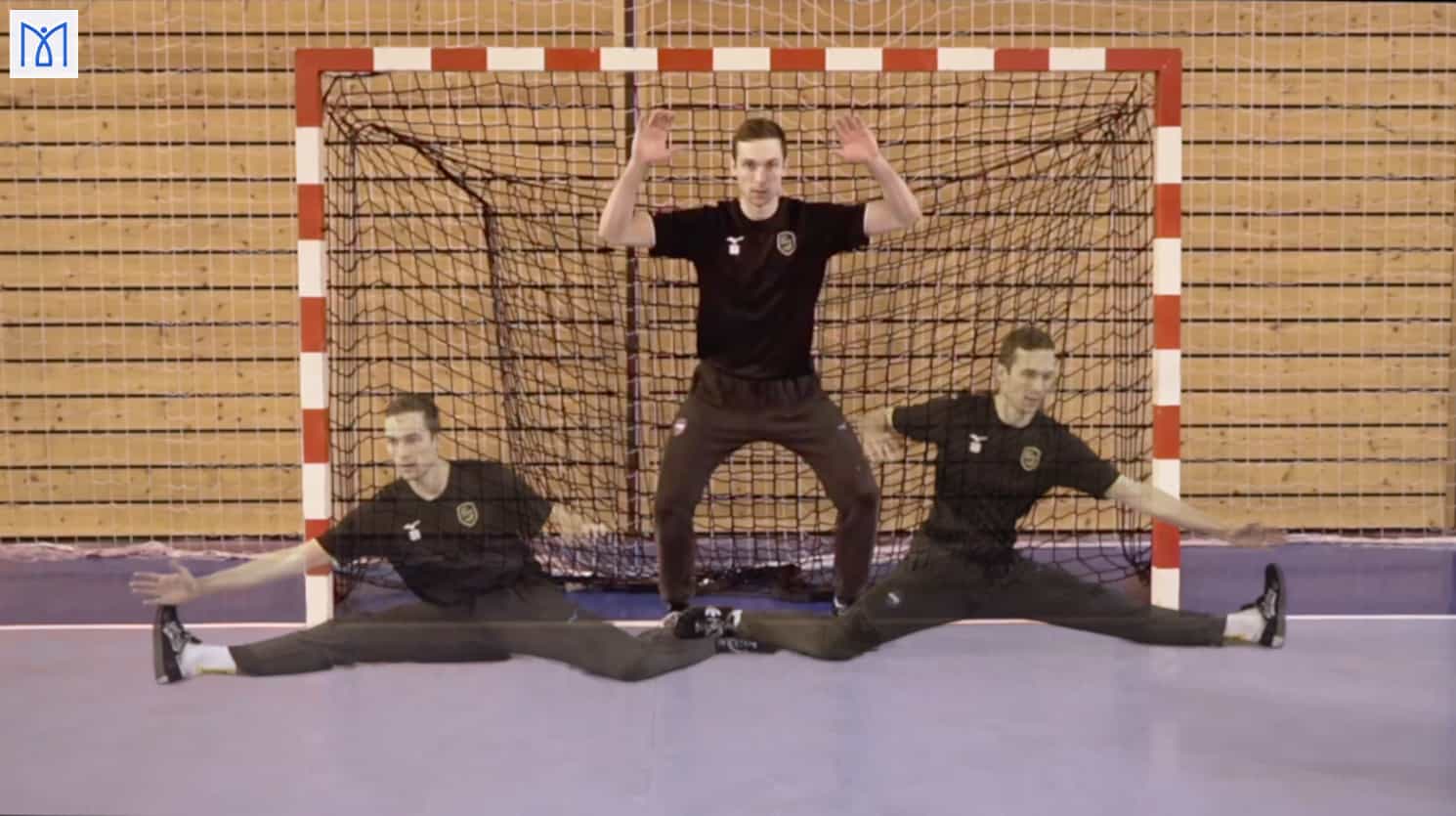
The goal of a slide is to cover maximum space with the full length of your leg. Unlike a standard kick save where you cover about a meter, a slide utilizes your full height.
To execute this safely and effectively, you must focus on External Rotation:
Hip Position: External rotation of the hip with trunk extension.
Leg Position: The upper leg extends, while the lower leg flexes.
The Point of Contact: This is the most critical detail. The first touch on the floor must be with the back of the foot (the heel), not the side of the ankle.
The "Toe Trick" for Safety
To ensure you land on your heel, you need a mental cue. Think about pulling your toes and fingers back.
If you point your toes, you risk landing on a pronated foot, which causes high friction and torque on the ankle and knee. By pulling the toes back, you naturally expose the heel, allowing for a smooth glide rather than a jarring impact.
Avoiding Injury: The Trajectory Matter
Why do goalkeepers get hurt sliding? It usually comes down to their trajectory.
Many keepers make the mistake of moving laterally first, then dropping down. This creates a "drop effect" where your full body weight crashes down onto the knee or hip. It creates trauma. It might not hurt the first time, but after 100 repetitions, injury is inevitable.
The Correct Trajectory: You must go down and to the side simultaneously. Your hips should drop immediately as you push off. By lowering your center of gravity early, you eliminate the impact of the fall and glide smoothly across the floor.
The Three Types of Sliding
Once you have the safety mechanics down, you can apply them to three specific game situations.
1. Basic Sliding (One-Handed)
This is the standard technique for low corner shots. You drive with the leg, connecting one hand to the movement to close the angle. The focus here is range and speed.
2. Two-Handed Sliding (Middle Balls)
This variation is used for balls that are low but slightly closer to the body (middle zone). You slide to position your body behind the ball, using both hands to secure the save. This offers more control and rebound prevention.
3. Static (Drop) Sliding
This is highly effective for diagonal shots, such as those from the Left or Right Back positions.
In a static slide, you drop immediately from your stance without a large lateral step. Because you are often positioned diagonally to the shooter, simply dropping into a slide covers both the near and far post angles simultaneously.
Common Mistakes to Avoid
Even pro goalkeepers make errors that reduce their save percentage. Watch out for these bad habits:
Leaning Back: When sliding, many keepers instinctively lean their trunk backward. This causes your hands and legs to retract, actually reducing your coverage area. Keep your weight forward and your hands pushing toward the ball.
Body Rotation: Don't rotate your torso away from the shot. Stay square to the ball to maintain stability and reach.
Aesthetic over Function: Don't slide just to look cool or "beautiful." Open your leg fully to create a barrier. We aren't dancing; we are building a wall.
Conclusion
Sliding is more than just a flashy move; it is a calculated technique to seal off the bottom of the goal. But remember: muscle memory takes time to build.
Start slow. Focus on pulling the toes back to protect your joints, and ensure your hips drop with your movement, not after. Once you master the mechanics, you won't just save more goals—you’ll stay healthy enough to play for years to come.
Ready to improve your game? Check out our next lesson where we break down the specific drills to build this muscle memory safely.
Next Step for User: Would you like me to create a 3-step practice drill plan based on this blog post for coaches to use in their next training session?