The Simple Guide to Perfect Handball Goalkeeper Positioning
Learn the fundamentals of handball goalkeeper positioning. Master your center of gravity, arm placement, and debunk the "on your toes" myth to make more saves.
5 min

Marko Markis
In the high-speed world of handball, it’s easy for goalkeepers to get overwhelmed by complex techniques and theories. However, the biggest improvements often come from mastering the absolute basics.
If you are tense, overthinking your next move, or constantly finding yourself off-balance, the issue likely isn't your reaction time—it’s your fundamental stance.
The ultimate goal of basic goalkeeper positioning is simple: to put yourself in a state where you don't have to think to react. When your stance is correct, your body naturally moves in the right direction to make the save. Here is a step-by-step breakdown of how to build a solid, effective handball goalkeeper stance.
1. Perfect Your Arm Position: Relax to React
A common mistake many goalkeepers make is holding too much tension in their upper body. If your shoulders are shrugged high near your ears, you are wasting energy. Tension makes you slower.
Keep it Relaxed: The more relaxed your shoulders and arms are, the more explosive power you will have when you need to react fast.
Keep Hands Forward: Your hands should always be positioned slightly forward relative to your body.
Why? If your hands are forward, you are already moving toward the ball when you extend to make a save. If your hands are tucked back near your chest, your first instinctive movement will be backward, pulling you away from the shot.
2. Master Your Center of Gravity
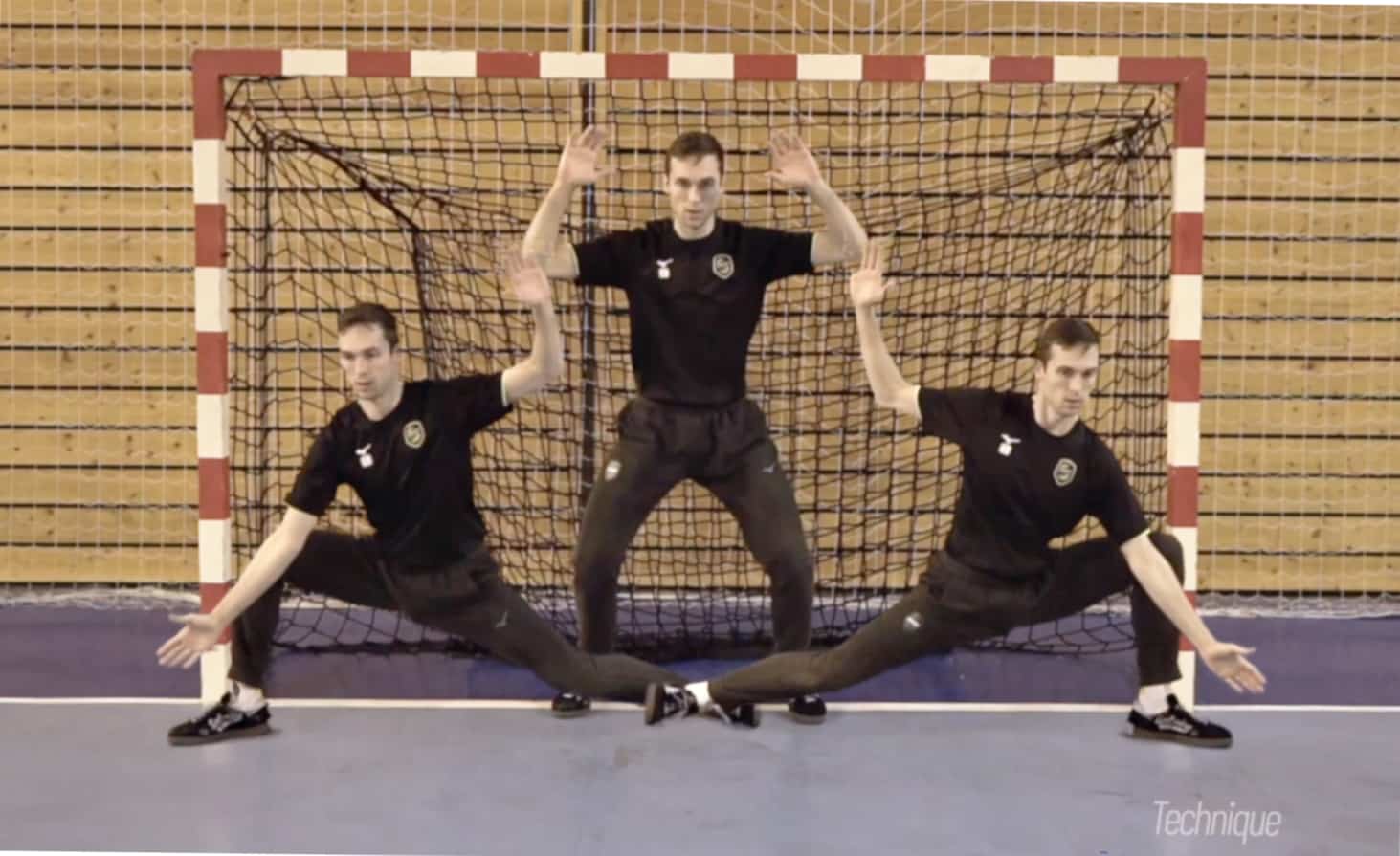
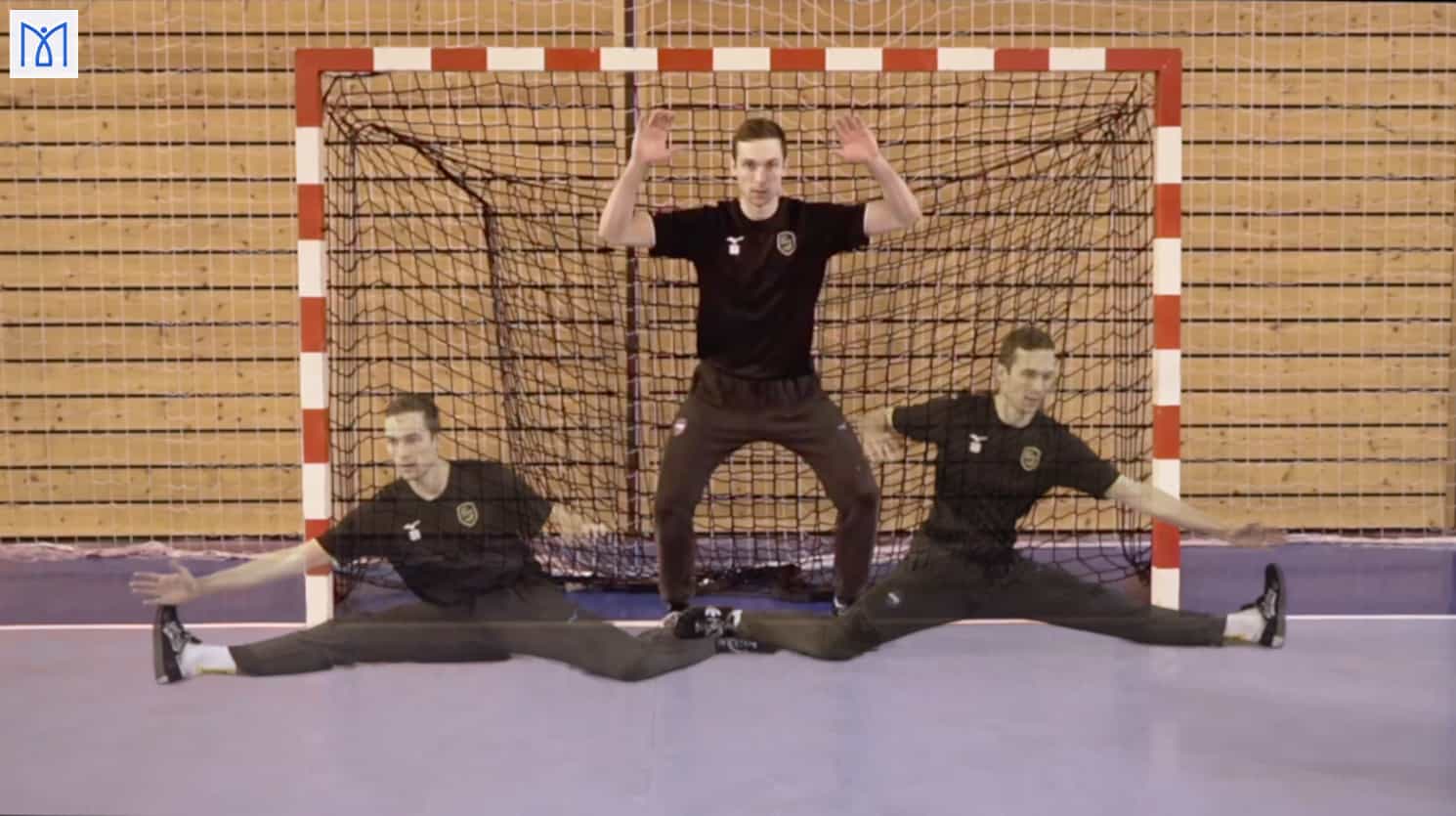
Your leg position dictates your ability to move efficiently. Your feet should be slightly wider than hip-width apart, with a slight bend (flexion) in your hips and knees.
The Forward Center of Gravity Rule: Your center of gravity needs to be positioned toward the front of your foot. A forward center of gravity gives your body the freedom to react instantly—left, right, or up.
Why Goalkeepers Fall Backward: If your hips are pushed too far back or you are squatting too low, your center of gravity shifts backward. This is the primary reason goalkeepers "fall on their ass" when attempting a low save. It is physically impossible to explode forward toward the ball when your weight is already pulling you backward.
3. The 90-Degree Rule of Positioning
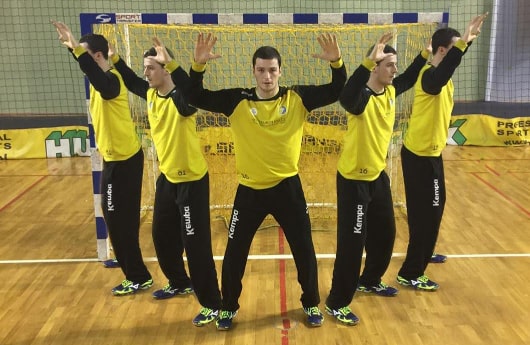
Once your physical stance is set, you need to align yourself correctly relative to the shooter. The golden rule of positioning is the 90-degree rule. Your upper body should always be positioned at a 90-degree angle relative to the ball.
The simple cue to remember this: "Your chest must always be watching the ball."
Whether the ball is at the center back position, moving to the left back, or all the way out on the wing, your chest should turn to face it directly. By following this rule, you will automatically place yourself in the correct defensive angle.
4. Debunking the "On Your Toes" Myth
For years, many coaches have taught young athletes to stay "on their toes" so they are ready to react. In handball goalkeeping, this is terrible advice. Staying up on your toes actually makes you slower.
If you are on your toes and need to make an explosive lateral move to save a corner shot, you are forced to make two movements:
You must drop your heel to the floor to gain traction.
Then, you can push off.
That split-second delay costs you goals. Explosive power comes from pushing off with the full foot. You need full contact with the floor to generate maximum force instantly. Keep your feet flat, keep your knees bent, and use big, efficient steps rather than tiny, nervous shuffling ones.
Summary: How to Improve Goalkeeper Stance
Great goalkeeping doesn't have to be complicated. By relaxing your shoulders, keeping your hands forward, maintaining a forward center of gravity, and keeping your chest square to the ball, you eliminate the need to overthink.
Master these four basics, and you will find yourself making saves you used to miss—simply because you are in the right place at the right time.
Weekly Newsletter Update!
Stay up-to-date with the latest innovations, features, blogs and projects.
The Simple Guide to Perfect Handball Goalkeeper Positioning
Learn the fundamentals of handball goalkeeper positioning. Master your center of gravity, arm placement, and debunk the "on your toes" myth to make more saves.
5 min
Marko Markis
In the high-speed world of handball, it’s easy for goalkeepers to get overwhelmed by complex techniques and theories. However, the biggest improvements often come from mastering the absolute basics.
If you are tense, overthinking your next move, or constantly finding yourself off-balance, the issue likely isn't your reaction time—it’s your fundamental stance.
The ultimate goal of basic goalkeeper positioning is simple: to put yourself in a state where you don't have to think to react. When your stance is correct, your body naturally moves in the right direction to make the save. Here is a step-by-step breakdown of how to build a solid, effective handball goalkeeper stance.
1. Perfect Your Arm Position: Relax to React
A common mistake many goalkeepers make is holding too much tension in their upper body. If your shoulders are shrugged high near your ears, you are wasting energy. Tension makes you slower.
Keep it Relaxed: The more relaxed your shoulders and arms are, the more explosive power you will have when you need to react fast.
Keep Hands Forward: Your hands should always be positioned slightly forward relative to your body.
Why? If your hands are forward, you are already moving toward the ball when you extend to make a save. If your hands are tucked back near your chest, your first instinctive movement will be backward, pulling you away from the shot.
2. Master Your Center of Gravity
Your leg position dictates your ability to move efficiently. Your feet should be slightly wider than hip-width apart, with a slight bend (flexion) in your hips and knees.
The Forward Center of Gravity Rule: Your center of gravity needs to be positioned toward the front of your foot. A forward center of gravity gives your body the freedom to react instantly—left, right, or up.
Why Goalkeepers Fall Backward: If your hips are pushed too far back or you are squatting too low, your center of gravity shifts backward. This is the primary reason goalkeepers "fall on their ass" when attempting a low save. It is physically impossible to explode forward toward the ball when your weight is already pulling you backward.
3. The 90-Degree Rule of Positioning
Once your physical stance is set, you need to align yourself correctly relative to the shooter. The golden rule of positioning is the 90-degree rule. Your upper body should always be positioned at a 90-degree angle relative to the ball.
The simple cue to remember this: "Your chest must always be watching the ball."
Whether the ball is at the center back position, moving to the left back, or all the way out on the wing, your chest should turn to face it directly. By following this rule, you will automatically place yourself in the correct defensive angle.
4. Debunking the "On Your Toes" Myth
For years, many coaches have taught young athletes to stay "on their toes" so they are ready to react. In handball goalkeeping, this is terrible advice. Staying up on your toes actually makes you slower.
If you are on your toes and need to make an explosive lateral move to save a corner shot, you are forced to make two movements:
You must drop your heel to the floor to gain traction.
Then, you can push off.
That split-second delay costs you goals. Explosive power comes from pushing off with the full foot. You need full contact with the floor to generate maximum force instantly. Keep your feet flat, keep your knees bent, and use big, efficient steps rather than tiny, nervous shuffling ones.
Summary: How to Improve Goalkeeper Stance
Great goalkeeping doesn't have to be complicated. By relaxing your shoulders, keeping your hands forward, maintaining a forward center of gravity, and keeping your chest square to the ball, you eliminate the need to overthink.
Master these four basics, and you will find yourself making saves you used to miss—simply because you are in the right place at the right time.
Weekly Newsletter Update!
Stay up-to-date with the latest innovations, features, blogs and projects.
The Simple Guide to Perfect Handball Goalkeeper Positioning
Learn the fundamentals of handball goalkeeper positioning. Master your center of gravity, arm placement, and debunk the "on your toes" myth to make more saves.
5 min
Marko Markis
In the high-speed world of handball, it’s easy for goalkeepers to get overwhelmed by complex techniques and theories. However, the biggest improvements often come from mastering the absolute basics.
If you are tense, overthinking your next move, or constantly finding yourself off-balance, the issue likely isn't your reaction time—it’s your fundamental stance.
The ultimate goal of basic goalkeeper positioning is simple: to put yourself in a state where you don't have to think to react. When your stance is correct, your body naturally moves in the right direction to make the save. Here is a step-by-step breakdown of how to build a solid, effective handball goalkeeper stance.
1. Perfect Your Arm Position: Relax to React
A common mistake many goalkeepers make is holding too much tension in their upper body. If your shoulders are shrugged high near your ears, you are wasting energy. Tension makes you slower.
Keep it Relaxed: The more relaxed your shoulders and arms are, the more explosive power you will have when you need to react fast.
Keep Hands Forward: Your hands should always be positioned slightly forward relative to your body.
Why? If your hands are forward, you are already moving toward the ball when you extend to make a save. If your hands are tucked back near your chest, your first instinctive movement will be backward, pulling you away from the shot.
2. Master Your Center of Gravity
Your leg position dictates your ability to move efficiently. Your feet should be slightly wider than hip-width apart, with a slight bend (flexion) in your hips and knees.
The Forward Center of Gravity Rule: Your center of gravity needs to be positioned toward the front of your foot. A forward center of gravity gives your body the freedom to react instantly—left, right, or up.
Why Goalkeepers Fall Backward: If your hips are pushed too far back or you are squatting too low, your center of gravity shifts backward. This is the primary reason goalkeepers "fall on their ass" when attempting a low save. It is physically impossible to explode forward toward the ball when your weight is already pulling you backward.
3. The 90-Degree Rule of Positioning
Once your physical stance is set, you need to align yourself correctly relative to the shooter. The golden rule of positioning is the 90-degree rule. Your upper body should always be positioned at a 90-degree angle relative to the ball.
The simple cue to remember this: "Your chest must always be watching the ball."
Whether the ball is at the center back position, moving to the left back, or all the way out on the wing, your chest should turn to face it directly. By following this rule, you will automatically place yourself in the correct defensive angle.
4. Debunking the "On Your Toes" Myth
For years, many coaches have taught young athletes to stay "on their toes" so they are ready to react. In handball goalkeeping, this is terrible advice. Staying up on your toes actually makes you slower.
If you are on your toes and need to make an explosive lateral move to save a corner shot, you are forced to make two movements:
You must drop your heel to the floor to gain traction.
Then, you can push off.
That split-second delay costs you goals. Explosive power comes from pushing off with the full foot. You need full contact with the floor to generate maximum force instantly. Keep your feet flat, keep your knees bent, and use big, efficient steps rather than tiny, nervous shuffling ones.
Summary: How to Improve Goalkeeper Stance
Great goalkeeping doesn't have to be complicated. By relaxing your shoulders, keeping your hands forward, maintaining a forward center of gravity, and keeping your chest square to the ball, you eliminate the need to overthink.
Master these four basics, and you will find yourself making saves you used to miss—simply because you are in the right place at the right time.
Weekly Newsletter Update!
Stay up-to-date with the latest innovations, features, blogs and projects.