Handball Goalkeeper Training Guide
Learn how to structure a professional handball goalkeeper training program. Discover the secrets to planning macrocycles, microcycles, and daily warm-ups.
5 min

Marko Markis
Whether you are a coach mapping out a season or a goalkeeper looking to take ownership of your development, success doesn’t happen by accident. It happens by design.
Many people think goalkeeper training is simply showing up and stopping shots. But if you want real, measurable results, you need a highly structured roadmap. In this guide, we break down exactly how to structure your handball goalkeeper training program—from the year-long vision down to the specific daily warm-up exercises.
Here is how to master the art of preparation and build a professional training routine.
1. The Three Pillars of Planning: Macro, Meso, and Microcycles
To build a professional training routine, you must organize your development into three specific time cycles. Think of this as zooming in from a satellite view down to street view.
What is a Macrocycle? (The Long Game)
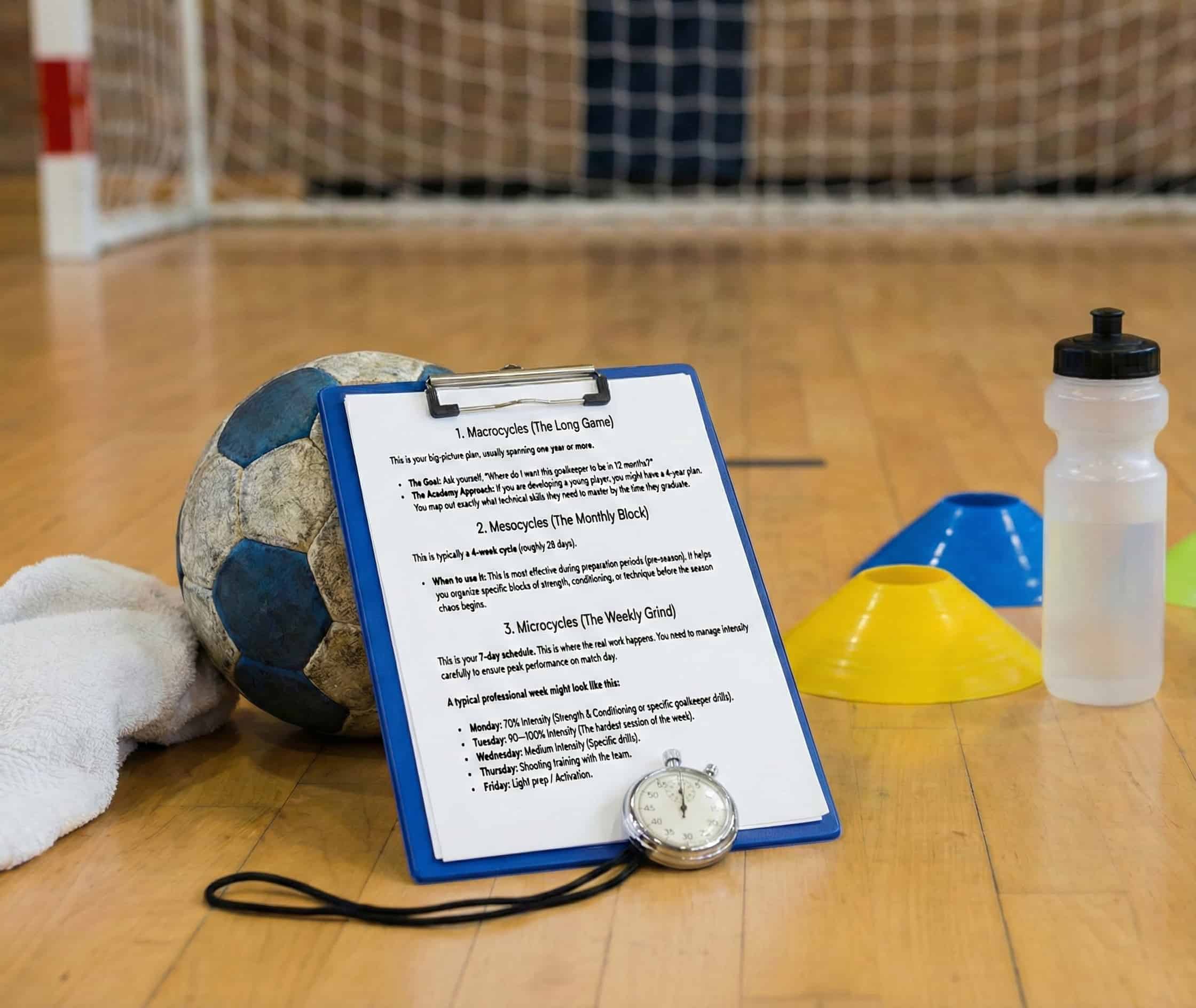
A macrocycle is your big-picture training plan, typically spanning one year or more.
The Goal: Ask yourself, "Where does this goalkeeper need to be in 12 months?"
The Academy Approach: For youth development, this might be a 4-year plan mapping out the exact technical skills a player needs to master before graduating to the senior team.
What is a Mesocycle? (The Monthly Block)
A mesocycle is a focused training block, typically lasting 4 weeks (roughly 28 days).
When to Use It: This is highly effective during pre-season preparation periods. It allows coaches to organize specific, intense blocks of strength, conditioning, or technical refinement before the competitive season begins.
What is a Microcycle? (The Weekly Schedule)
A microcycle is your 7-day schedule. This is where the daily work happens, and where coaches must carefully manage physical intensity to ensure peak performance on match day.
Example of a Professional Goalkeeper Microcycle:
Monday: 70% Intensity (Strength & conditioning or specific goalkeeper drills).
Tuesday: 90–100% Intensity (The hardest, most physically demanding session of the week).
Wednesday: Medium Intensity (Specific technical drills).
Thursday: Shooting training and tactical integration with the team.
Friday: Light preparation and neuromuscular activation.
Saturday: Match Day.
Sunday: Rest and active recovery.
(Note for Youth Coaches: Children aged 10–14 do not need this volume. One or two dedicated goalkeeper sessions a week focusing on technique and fun is enough to drive improvement.)
2. How to Structure a Perfect Goalkeeper Training Session
Once your weekly microcycle is planned, you must structure the individual daily sessions. A professional goalkeeper session generally lasts 90 to 120 minutes and consists of three non-negotiable phases.
Phase 1: The Dynamic Warm-Up (15–20 Minutes)
Never skip the warm-up, but avoid static stretching (holding a pose) before training. You need to prepare the body for explosive movement.
Synovial Fluid Activation (3 mins): Move your joints (ankles, knees, hips) continuously to lubricate the joints.
Dynamic Stretching (6 mins): Perform leg swings, walking lunges, and active hip mobility exercises.
Ladder Drills (9 mins): Activate the central nervous system, get the feet moving quickly, and raise the heart rate.
Phase 2: The Main Training Block (45–60 Minutes)
This is where the targeted development happens. You can structure this block in two ways:
Option A: The Split Focus
Part 1 (Technical): Strict, isolated focus on positioning, leg movement, or sliding mechanics.
Part 2 (Reaction/Game Context): Faster-paced reaction games or competitive, high-pressure drills.
Option B: The Single Focus (e.g., Plyometrics)
The entire main block is focused on one specific goal, such as explosive power.
Crucial Rule: When training explosiveness, rest is just as important as the jump. Enforce strict 60-second breaks between sets to ensure maximum effort on every rep.
Phase 3: Cool Down and Injury Prevention (15–20 Minutes)
This is the most neglected part of training, but it acts as your injury prevention insurance.
Focus Areas: Perform static stretches on the heavily used muscles (hip flexors, quads, hamstrings, adductors, and calves).
Order Matters: Work systematically—either start from the hips and go down, or start at the feet and go up.
Time Under Tension: Hold stretches for a minimum of 45 seconds. The typical 10-second count is not enough to increase flexibility or aid recovery.
3. The Reality Check: Why Adaptability is Key
Here is the most important lesson in professional coaching: Paper plans are perfect, but reality is messy.
You can have the most beautiful macrocycle drawn up, but unexpected variables will happen:
Players get injured or sick.
The head coach changes the team schedule at the last minute.
Gym access is restricted.
Do not panic. When the situation changes, don’t abandon your underlying philosophy—just adjust the immediate plan. If you lose a day, adapt the microcycle. If the head coach needs the goalies for a heavy shooting practice, find a compromise that prevents overtraining.
Summary
Planning handball goalkeeper training isn't about rigidly sticking to a spreadsheet; it's about having a clear vision for long-term development. Whether you are training Champions League professionals or 10-year-old beginners, a structured approach—Warm-up, Main Part, Cool-down—will always yield better, safer results than making it up as you go.
What does your current training week look like? Do you have a structured plan, or are you winging it? Let me know in my contact, or share this guide with a coach who needs to see it!
Weekly Newsletter Update!
Stay up-to-date with the latest innovations, features, blogs and projects.
Handball Goalkeeper Training Guide
Learn how to structure a professional handball goalkeeper training program. Discover the secrets to planning macrocycles, microcycles, and daily warm-ups.
5 min
Marko Markis
Whether you are a coach mapping out a season or a goalkeeper looking to take ownership of your development, success doesn’t happen by accident. It happens by design.
Many people think goalkeeper training is simply showing up and stopping shots. But if you want real, measurable results, you need a highly structured roadmap. In this guide, we break down exactly how to structure your handball goalkeeper training program—from the year-long vision down to the specific daily warm-up exercises.
Here is how to master the art of preparation and build a professional training routine.
1. The Three Pillars of Planning: Macro, Meso, and Microcycles
To build a professional training routine, you must organize your development into three specific time cycles. Think of this as zooming in from a satellite view down to street view.
What is a Macrocycle? (The Long Game)
A macrocycle is your big-picture training plan, typically spanning one year or more.
The Goal: Ask yourself, "Where does this goalkeeper need to be in 12 months?"
The Academy Approach: For youth development, this might be a 4-year plan mapping out the exact technical skills a player needs to master before graduating to the senior team.
What is a Mesocycle? (The Monthly Block)
A mesocycle is a focused training block, typically lasting 4 weeks (roughly 28 days).
When to Use It: This is highly effective during pre-season preparation periods. It allows coaches to organize specific, intense blocks of strength, conditioning, or technical refinement before the competitive season begins.
What is a Microcycle? (The Weekly Schedule)
A microcycle is your 7-day schedule. This is where the daily work happens, and where coaches must carefully manage physical intensity to ensure peak performance on match day.
Example of a Professional Goalkeeper Microcycle:
Monday: 70% Intensity (Strength & conditioning or specific goalkeeper drills).
Tuesday: 90–100% Intensity (The hardest, most physically demanding session of the week).
Wednesday: Medium Intensity (Specific technical drills).
Thursday: Shooting training and tactical integration with the team.
Friday: Light preparation and neuromuscular activation.
Saturday: Match Day.
Sunday: Rest and active recovery.
(Note for Youth Coaches: Children aged 10–14 do not need this volume. One or two dedicated goalkeeper sessions a week focusing on technique and fun is enough to drive improvement.)
2. How to Structure a Perfect Goalkeeper Training Session
Once your weekly microcycle is planned, you must structure the individual daily sessions. A professional goalkeeper session generally lasts 90 to 120 minutes and consists of three non-negotiable phases.
Phase 1: The Dynamic Warm-Up (15–20 Minutes)
Never skip the warm-up, but avoid static stretching (holding a pose) before training. You need to prepare the body for explosive movement.
Synovial Fluid Activation (3 mins): Move your joints (ankles, knees, hips) continuously to lubricate the joints.
Dynamic Stretching (6 mins): Perform leg swings, walking lunges, and active hip mobility exercises.
Ladder Drills (9 mins): Activate the central nervous system, get the feet moving quickly, and raise the heart rate.
Phase 2: The Main Training Block (45–60 Minutes)
This is where the targeted development happens. You can structure this block in two ways:
Option A: The Split Focus
Part 1 (Technical): Strict, isolated focus on positioning, leg movement, or sliding mechanics.
Part 2 (Reaction/Game Context): Faster-paced reaction games or competitive, high-pressure drills.
Option B: The Single Focus (e.g., Plyometrics)
The entire main block is focused on one specific goal, such as explosive power.
Crucial Rule: When training explosiveness, rest is just as important as the jump. Enforce strict 60-second breaks between sets to ensure maximum effort on every rep.
Phase 3: Cool Down and Injury Prevention (15–20 Minutes)
This is the most neglected part of training, but it acts as your injury prevention insurance.
Focus Areas: Perform static stretches on the heavily used muscles (hip flexors, quads, hamstrings, adductors, and calves).
Order Matters: Work systematically—either start from the hips and go down, or start at the feet and go up.
Time Under Tension: Hold stretches for a minimum of 45 seconds. The typical 10-second count is not enough to increase flexibility or aid recovery.
3. The Reality Check: Why Adaptability is Key
Here is the most important lesson in professional coaching: Paper plans are perfect, but reality is messy.
You can have the most beautiful macrocycle drawn up, but unexpected variables will happen:
Players get injured or sick.
The head coach changes the team schedule at the last minute.
Gym access is restricted.
Do not panic. When the situation changes, don’t abandon your underlying philosophy—just adjust the immediate plan. If you lose a day, adapt the microcycle. If the head coach needs the goalies for a heavy shooting practice, find a compromise that prevents overtraining.
Summary
Planning handball goalkeeper training isn't about rigidly sticking to a spreadsheet; it's about having a clear vision for long-term development. Whether you are training Champions League professionals or 10-year-old beginners, a structured approach—Warm-up, Main Part, Cool-down—will always yield better, safer results than making it up as you go.
What does your current training week look like? Do you have a structured plan, or are you winging it? Let me know in my contact, or share this guide with a coach who needs to see it!
Weekly Newsletter Update!
Stay up-to-date with the latest innovations, features, blogs and projects.
Handball Goalkeeper Training Guide
Learn how to structure a professional handball goalkeeper training program. Discover the secrets to planning macrocycles, microcycles, and daily warm-ups.
5 min
Marko Markis
Whether you are a coach mapping out a season or a goalkeeper looking to take ownership of your development, success doesn’t happen by accident. It happens by design.
Many people think goalkeeper training is simply showing up and stopping shots. But if you want real, measurable results, you need a highly structured roadmap. In this guide, we break down exactly how to structure your handball goalkeeper training program—from the year-long vision down to the specific daily warm-up exercises.
Here is how to master the art of preparation and build a professional training routine.
1. The Three Pillars of Planning: Macro, Meso, and Microcycles
To build a professional training routine, you must organize your development into three specific time cycles. Think of this as zooming in from a satellite view down to street view.
What is a Macrocycle? (The Long Game)
A macrocycle is your big-picture training plan, typically spanning one year or more.
The Goal: Ask yourself, "Where does this goalkeeper need to be in 12 months?"
The Academy Approach: For youth development, this might be a 4-year plan mapping out the exact technical skills a player needs to master before graduating to the senior team.
What is a Mesocycle? (The Monthly Block)
A mesocycle is a focused training block, typically lasting 4 weeks (roughly 28 days).
When to Use It: This is highly effective during pre-season preparation periods. It allows coaches to organize specific, intense blocks of strength, conditioning, or technical refinement before the competitive season begins.
What is a Microcycle? (The Weekly Schedule)
A microcycle is your 7-day schedule. This is where the daily work happens, and where coaches must carefully manage physical intensity to ensure peak performance on match day.
Example of a Professional Goalkeeper Microcycle:
Monday: 70% Intensity (Strength & conditioning or specific goalkeeper drills).
Tuesday: 90–100% Intensity (The hardest, most physically demanding session of the week).
Wednesday: Medium Intensity (Specific technical drills).
Thursday: Shooting training and tactical integration with the team.
Friday: Light preparation and neuromuscular activation.
Saturday: Match Day.
Sunday: Rest and active recovery.
(Note for Youth Coaches: Children aged 10–14 do not need this volume. One or two dedicated goalkeeper sessions a week focusing on technique and fun is enough to drive improvement.)
2. How to Structure a Perfect Goalkeeper Training Session
Once your weekly microcycle is planned, you must structure the individual daily sessions. A professional goalkeeper session generally lasts 90 to 120 minutes and consists of three non-negotiable phases.
Phase 1: The Dynamic Warm-Up (15–20 Minutes)
Never skip the warm-up, but avoid static stretching (holding a pose) before training. You need to prepare the body for explosive movement.
Synovial Fluid Activation (3 mins): Move your joints (ankles, knees, hips) continuously to lubricate the joints.
Dynamic Stretching (6 mins): Perform leg swings, walking lunges, and active hip mobility exercises.
Ladder Drills (9 mins): Activate the central nervous system, get the feet moving quickly, and raise the heart rate.
Phase 2: The Main Training Block (45–60 Minutes)
This is where the targeted development happens. You can structure this block in two ways:
Option A: The Split Focus
Part 1 (Technical): Strict, isolated focus on positioning, leg movement, or sliding mechanics.
Part 2 (Reaction/Game Context): Faster-paced reaction games or competitive, high-pressure drills.
Option B: The Single Focus (e.g., Plyometrics)
The entire main block is focused on one specific goal, such as explosive power.
Crucial Rule: When training explosiveness, rest is just as important as the jump. Enforce strict 60-second breaks between sets to ensure maximum effort on every rep.
Phase 3: Cool Down and Injury Prevention (15–20 Minutes)
This is the most neglected part of training, but it acts as your injury prevention insurance.
Focus Areas: Perform static stretches on the heavily used muscles (hip flexors, quads, hamstrings, adductors, and calves).
Order Matters: Work systematically—either start from the hips and go down, or start at the feet and go up.
Time Under Tension: Hold stretches for a minimum of 45 seconds. The typical 10-second count is not enough to increase flexibility or aid recovery.
3. The Reality Check: Why Adaptability is Key
Here is the most important lesson in professional coaching: Paper plans are perfect, but reality is messy.
You can have the most beautiful macrocycle drawn up, but unexpected variables will happen:
Players get injured or sick.
The head coach changes the team schedule at the last minute.
Gym access is restricted.
Do not panic. When the situation changes, don’t abandon your underlying philosophy—just adjust the immediate plan. If you lose a day, adapt the microcycle. If the head coach needs the goalies for a heavy shooting practice, find a compromise that prevents overtraining.
Summary
Planning handball goalkeeper training isn't about rigidly sticking to a spreadsheet; it's about having a clear vision for long-term development. Whether you are training Champions League professionals or 10-year-old beginners, a structured approach—Warm-up, Main Part, Cool-down—will always yield better, safer results than making it up as you go.
What does your current training week look like? Do you have a structured plan, or are you winging it? Let me know in my contact, or share this guide with a coach who needs to see it!
Weekly Newsletter Update!
Stay up-to-date with the latest innovations, features, blogs and projects.