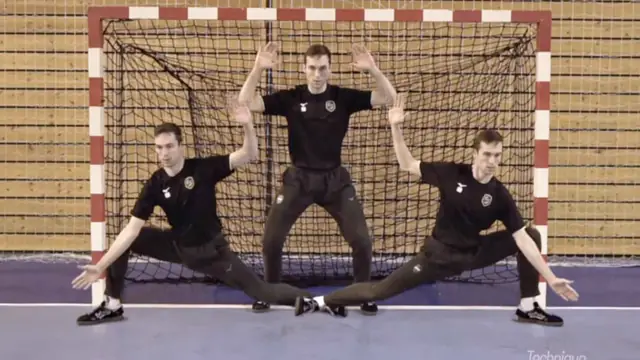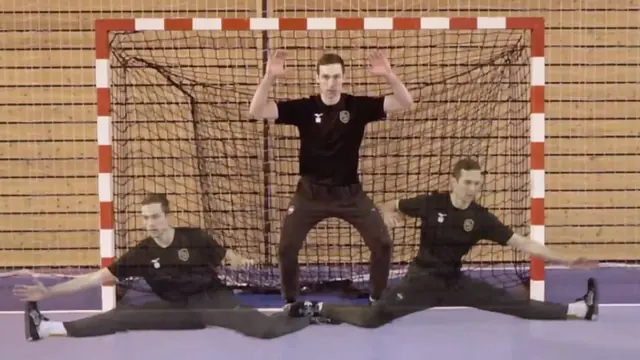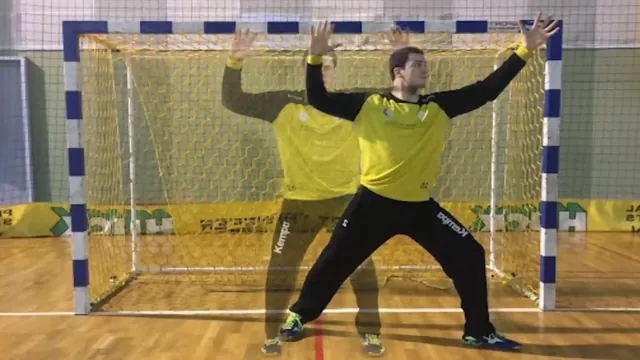
Imagine pausing a match just as a backcourt player releases the ball. The goalkeeper is stretched towards one side. There is a large space on the other. When the shot goes in, the first thought is that the goalkeeper needed to be quicker.
Now rewind to the pass before the shot. The ball moved. The goalkeeper made a small adjustment, then another, and was still travelling when the shooter released.
The problem started before the save attempt. That is why positioning is central to my coaching: it changes the amount of goal you must defend, the distance you must move and the responses available when the ball leaves the hand.
First, stand where you can move
Before deciding where to stand in the goal area, look at how you stand. A useful stance should let you move towards either side without first having to untangle your body.
Begin with a comfortable width, some bend through the hips and knees, and the hands available slightly in front. Keep the shoulders ready without unnecessary tension. The exact shape varies with the goalkeeper and the situation; a taller player and a smaller player may not look identical.
In the opening example, check whether the goalkeeper’s weight had drifted backwards. If the hips sit too far behind the feet, the next response may carry the body backwards as well. A hand reaching forwards then has to work from a body that is moving away from the shot.
I prefer practical tests to arguing about a frozen photograph. Can the goalkeeper move to either side? Can they stop in balance? Can they make the next movement without an extra reset? The stance must answer those questions on court.
Turn towards the ball, then check the space
I often use the cue “chest square to the ball”. It helps the goalkeeper orient the body towards the shot rather than leave one shoulder behind.
Orientation is only one part of positioning. You also need to be in the useful space between the ball and the goal. Facing the shooter while standing too far to one side can still leave a large opening.
Imagine lines from the ball to the two posts. These outline the width the shot can reach. Look for a balanced position within that angle, then adjust as the ball and the shooter’s release point move. In practical coaching, this is the relationship I want the goalkeeper to understand.
A marked arc can help a beginner explore positions. It is a reference, not a route the goalkeeper must obey regardless of the ball. The shot determines the problem.
A step forwards changes two things
Moving towards the ball can reduce the apparent space around the goalkeeper. It also reduces the time before the ball reaches them. The trade-off explains why there is no single correct distance from the goal line for every player and every shot.
Height, reach, shot distance, the defensive block and the shooter’s options all contribute. Against a close-range attacker, committing too far forwards can also expose the goalkeeper to a change of direction or a lob.
Start with a controlled practice comparison. Put a shooter at a known position and ask how much goal is visible. Change the goalkeeper’s depth and ask again. Then introduce controlled shots and observe whether the goalkeeper can still read and respond.
The exercise teaches the effect of depth without promising that moving forwards always improves the result.
Arrive before the moment you need to react
Return to the pass across the backcourt. The goalkeeper needs enough movement to reach the new position, followed by enough control to deal with the shot.
When the distance is larger, repeated tiny steps may leave the goalkeeper still moving when the shot is released. A more decisive adjustment can help. Near the final position, smaller corrections may be appropriate as the shooter changes the angle.
The number of steps is not the target. Arrival in a useful position is. Watch whether the first movement follows the ball promptly and whether the goalkeeper can respond to a quick release instead of completing a rehearsed route.
Foot contact should support that task. I do not want a goalkeeper perched stiffly on their toes or planted so heavily that movement becomes difficult. Test the push and the balance in the actual action rather than turning one foot cue into a rule for every situation.
The same principle meets different shots
From the wing, the available angle can change rapidly as the player jumps towards the centre. The goalkeeper must account for the near post and follow the developing release position.
Against a pivot at six metres, a forward rush can leave the goalkeeper positioned for where the player was before turning or jumping. Reading that movement and adjusting across can be more useful.
From the backcourt, the block may take away part of the goal or obscure the release. The goalkeeper’s position belongs in the team’s defensive plan, so discuss responsibilities with the defenders.
These situations share a question: where can this ball actually go, and am I positioned to respond? They need different practical answers.
Rewatch the first clip
For your next session, film a goalkeeper facing a pass between two shooting positions. Begin predictably, then vary whether the receiver shoots immediately or passes again. Choose a pace at which the goalkeeper can learn, then increase the decision challenge.
Review three moments: the first adjustment, the position at release and the start of the save. Ask the goalkeeper what they saw before adding your observations.
The shot in the opening example may still be difficult to save. But now the review has more to offer than “be faster”. You can identify the movement that left too much work for the final reach—and give tomorrow’s practice a clear purpose.
Related reading: saving high shots, saving low shots and planning training.