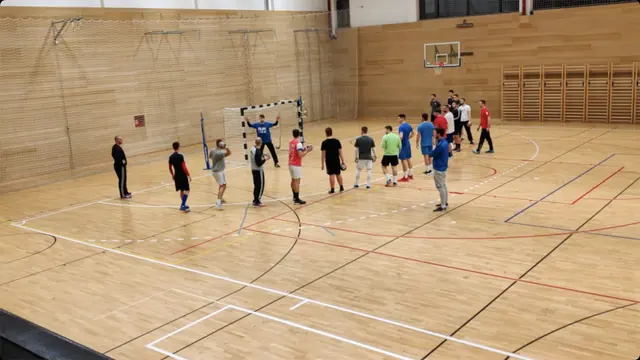
A line of players waits in the middle. One shoots, the goalkeeper responds, the next ball arrives. It is a familiar part of warming up before handball.
Now consider the first attack of the match. The ball moves across the backcourt, reaches the wing and changes the shooting angle. The goalkeeper must travel, arrive and respond to a release from somewhere different.
That comparison is why I want a warm-up to develop towards the situations the goalkeeper will face. Central shots can serve a purpose. They should be part of a progression that also prepares movement, attention and changing angles.
Begin with the goalkeeper’s readiness
The first minutes should make it possible to move with increasing control and confidence. Use comfortable general movement, then gradually include the ankles, hips, trunk, shoulders and the movement patterns relevant to the session.
I favour a dynamic progression, building the range and intensity rather than beginning with maximum efforts. Observe how the goalkeeper moves that day. Travel, the previous training load and individual preparation needs can affect the starting point.
A warm-up is not the place to force an unfamiliar end range or introduce a difficult new exercise. Any individual work agreed with the player’s physical preparation or medical staff belongs in the wider plan.
The aim is practical readiness. There is no need to tell a young goalkeeper that their joints will grind without a particular three-minute sequence. Explain what they will do and build towards it sensibly.
Let the feet lead somewhere useful
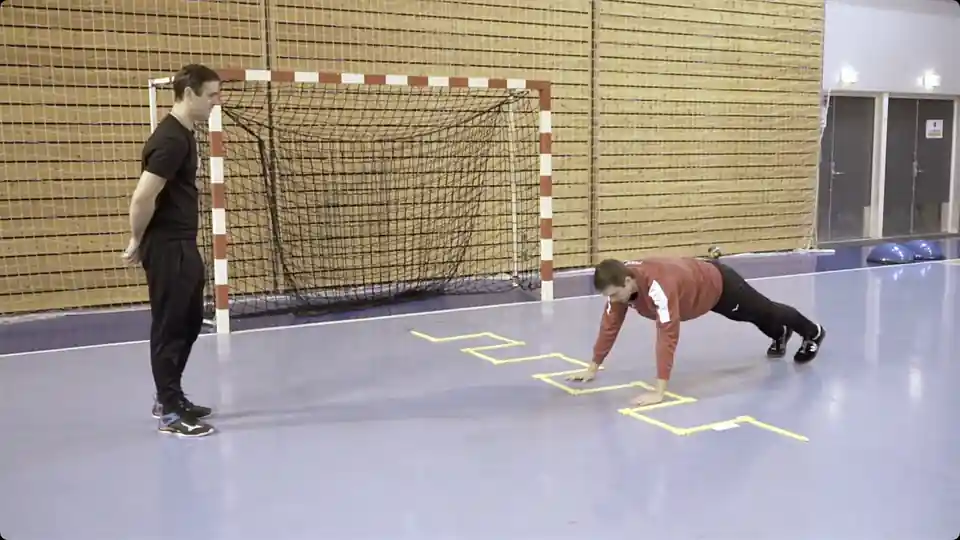
Add controlled changes of direction and movements that finish in the goalkeeper’s stance. Floor markers or a ladder can organise the space, but the final balance matters more than a fast pattern through the equipment.
I sometimes vary the path with curves, so the goalkeeper has to adjust direction. Begin with small, controlled movements before increasing speed or adding more demanding contacts.
For younger players, simplify the coordination and keep the task understandable. Watch whether the player is becoming ready for goalkeeping, rather than measuring the warm-up by how complicated it looks.
The goalkeeper should arrive at the ball work prepared to respond, with enough energy left for what follows.
Introduce the ball without turning it into a contest
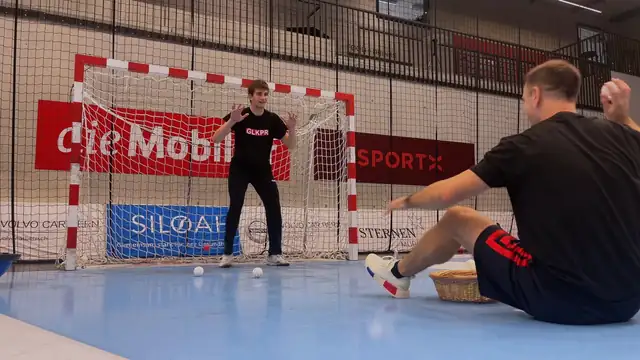
Start with controlled, accurate throws at known heights. The goalkeeper can feel the hand and leg responses and move through a comfortable range.
The thrower’s job is important. An inaccurate or unexpectedly hard close-range ball changes the task. Agree the placement and pace before beginning, allow the goalkeeper to become ready and send one ball at a time.
Increase variation as readiness develops. Move the ball between positions and let the goalkeeper adjust before the next throw. The preparation now includes the connection between seeing the ball move and arriving in the new angle.
Watch the quality of the final position. A goalkeeper who is constantly caught halfway through the adjustment may need a slower sequence, clearer timing or fewer demands.
Change the view from the middle
One format I use has three shooting positions: left back, centre and right back. A simple agreed pattern gives each player a clear target while the goalkeeper practises the changes between angles.
For example, the shooters can alternate near- and far-side placements at a controlled pace. Explain the order before starting and leave enough time for the goalkeeper to reposition. The pattern can then become less predictable as the warm-up approaches match demands.
Use distances and speeds that allow accurate, appropriate throws. Moving closer does not make a hard shot safer or automatically make the exercise better. Choose the setup based on throwing accuracy and the goalkeeper’s readiness.
Depending on the available time and team routine, include a small amount of relevant wing or close-range preparation as well. Coordinate it with the team so the warm-up flows.
A sequence you can adapt
For an illustrative 25-minute routine, allow around eight minutes for progressive general movement, five for specific footwork and coordination, five for controlled ball responses and seven for changing angles and match preparation.
That timing is a starting point. The individual, age group, available court time and existing team programme may require something different. Keep the progression from manageable movement towards the demands of play.
Before the next match, review the routine with your goalkeeper. Which part helps them feel ready? Which angle or movement is missing? Make one useful change and observe its effect over several sessions.
When the first attack shifts the ball across the court, that movement should feel like something the goalkeeper has already begun preparing for.
Related reading: goalkeeper positioning and training planning.