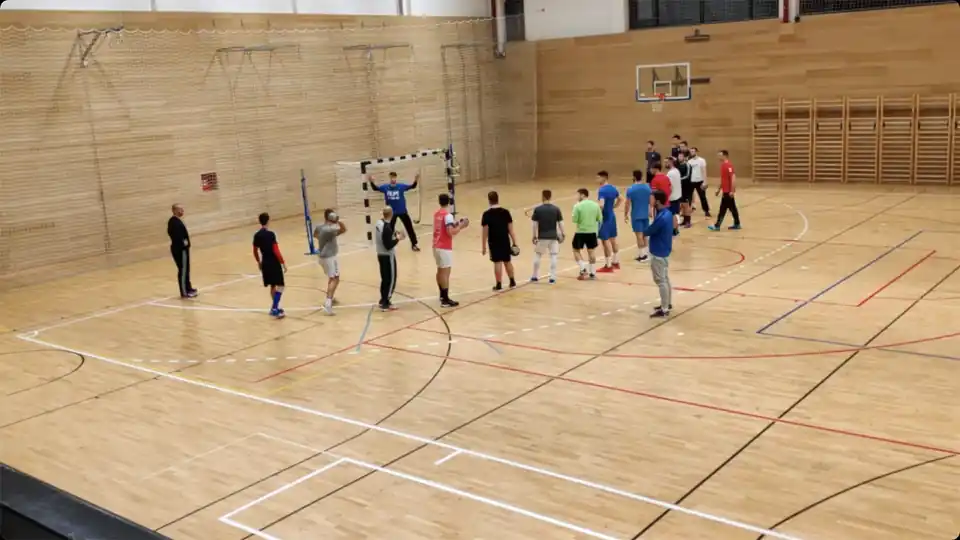
A coach plans a round of shots from nine metres. The players build speed, jump forwards and release closer to goal. The goalkeeper moves out expecting a distant shot and repeatedly faces something closer to a breakthrough.
The exercise has changed without anyone agreeing to change it.
This is one of the details I look for in shooting training. A session can provide valuable goalkeeper work, but the shooting position, timing and decisions must match the skill we intend to practise. Otherwise, the goalkeeper is working on a different task from the one the coach describes.
Start by agreeing what this round is for
In the example, decide whether the purpose is to face a backcourt release, practise close-range reactions or read an attacker gaining ground. Each can be useful. The players and goalkeeper need to understand which situation they are creating.
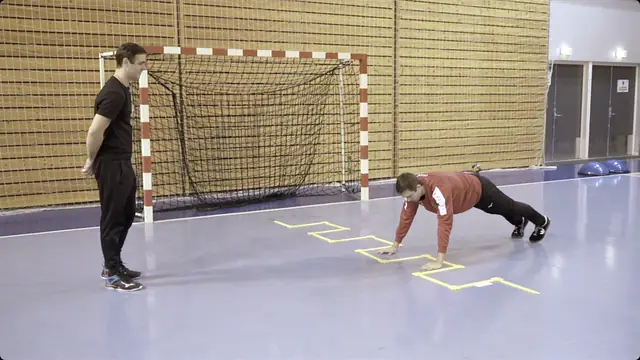
Use a clear floor reference for the intended release area and watch the actual throw. If players continue to arrive closer, adjust the starting position or instructions. Keep obstacles out of the shooting and landing paths.
This gives the coach a fair basis for feedback. The goalkeeper’s response should be judged against the ball they faced, with the agreed task providing context.
Begin with a movement, then add a decision
A controlled high-shot round can let the goalkeeper practise a direct hand movement and useful body height. A controlled low-shot round can focus on the route of the hips and the coordination of hand and leg.
Use a distance and pace appropriate for that work. At first, the shot location may be known. The goalkeeper should still use a realistic starting position rather than drift into the announced corner before the action.
Once the movement is understood, allow a choice of placement. Then add a pass or a moving shooter. The goalkeeper has to recognise when the technique fits instead of performing it on command.
This progression is where a shooting exercise becomes a lesson. The earlier round gives the player something to use in the later one.
Move the ball and watch the arrival
Alternate between left back and right back, with a central position when useful. Allow enough time for the goalkeeper to make the adjustment and become ready before the next release.
Watch whether the movement across goal is efficient and whether the goalkeeper finishes in balance. The aim is not a fixed number of steps. It is a position from which the next shot can be defended.
Now let players pass along the line and choose when to shoot. Begin slowly enough for the goalkeeper to follow the real cue. As the task develops, the goalkeeper must stay attentive to both the pass and the possibility of a quick release.
Only one player should release a ball at a time. Clear organisation protects the quality of the work and keeps the goalkeeper from facing overlapping shots.
Add uncertainty for a reason
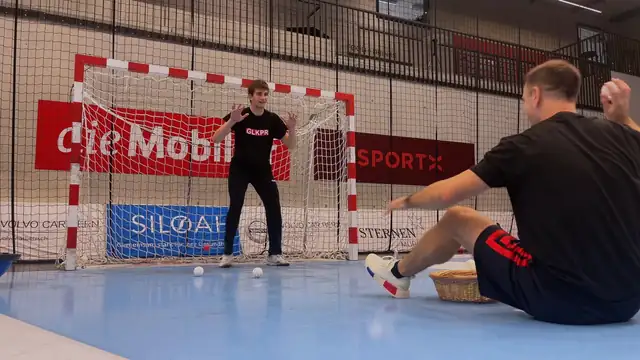
One variation I use assigns numbers to shooters positioned around the backcourt. Calling a number asks the goalkeeper to locate the shooter, adjust and respond. At first, use few positions and controlled timing.
This trains the goalkeeper to find and respond to a cue. It is a progression towards attention under pressure, not a complete replacement for reading normal attacking play. Follow it with an exercise where the cue comes from the ball and the players’ actions.
Targeted diagonal shots can serve a different purpose: the goalkeeper knows the destination but must still begin from the correct position and execute the intended movement. Explain why early guessing would remove the learning task.
Choose from these variations according to what the goalkeeper needs. Filling one session with every exercise makes it harder to observe a specific change.
Film enough to answer the question
A phone can provide useful training footage if it shows the relevant movement clearly. Frame the shooter, goalkeeper and goal when studying positioning. A closer or different view may be needed for a specific technical detail.
In live online work with Mathieu Seravalli, a phone camera and wireless earpieces let me communicate with both him and the demonstrator during training. The point of the equipment was the feedback it made possible.
Recorded footage supports a similar connection afterwards. Compare a few repetitions with the goalkeeper. Where did the movement change? Did the correction survive a less predictable shot? What should the next session revisit?
There is no need to chase a fixed total of 100 or 200 shots. Consider the quality and intensity of the attempts, planned goalkeeper rotations and the player’s total workload. More footage is only useful when it helps you see something relevant.
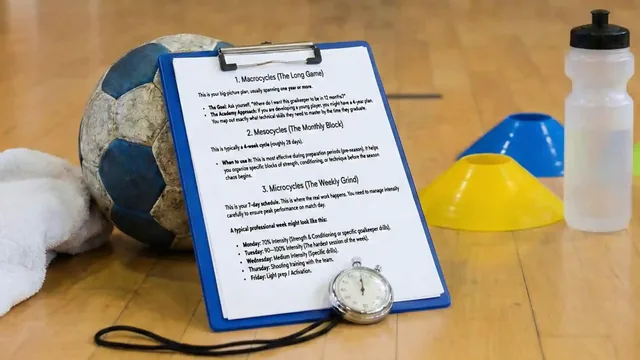
Return to the nine-metre round from the opening. The first correction may be to the exercise setup. Once the task is clear, the goalkeeper’s repetitions can develop the skill you intended to teach.
Related reading: saving high shots, saving low shots and planning training.