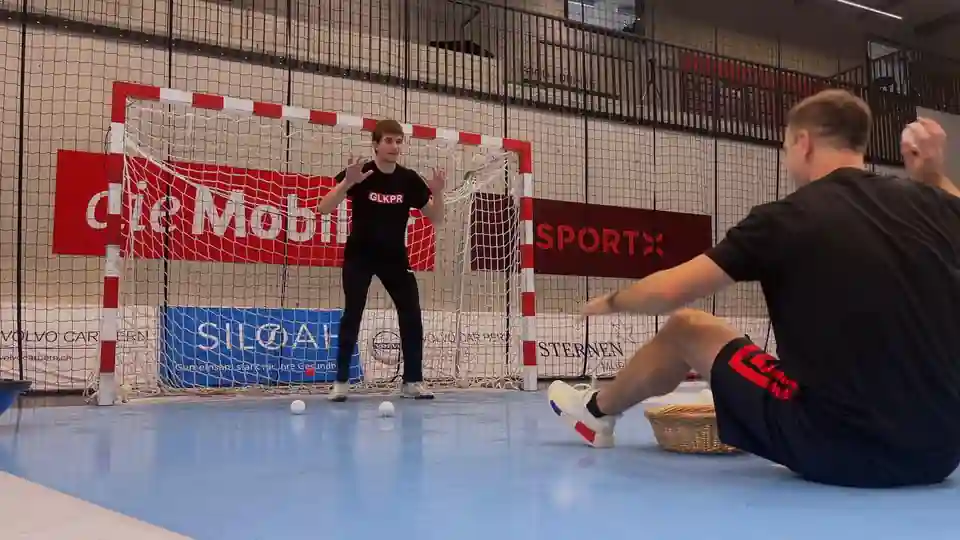
When I coached Mathieu Seravalli live online, his phone showed me the training. He and the demonstrator each wore a wireless earpiece. Both could hear the instructions during the session.
The important part was the connection between the people doing the exercise. The goalkeeper needed to know what to work on. The demonstrator needed to know what the next repetition should provide. I needed a view that let me give useful feedback.
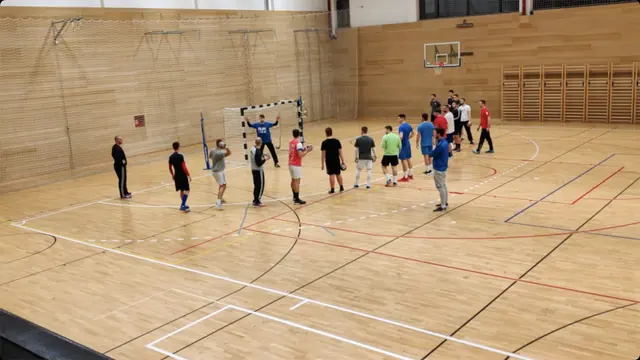
That is also what makes a drill work when everyone is in the same hall. Equipment and exercise ideas help, but the learning depends on a clear task and the way we respond to what happens.
Start with the detail you want to change
Suppose a goalkeeper is slow to recover after a low save. A complicated reaction circuit might expose the problem repeatedly without helping the player understand it.
Begin with a simpler sequence: a controlled low ball, recovery towards the basic position, then another manageable ball. Watch the transition. Can the goalkeeper finish the first action and become ready for the second?
At first, give enough time between throws. As control improves, vary the interval. The same exercise becomes more demanding because the goalkeeper has to judge when to recover and prepare, rather than follow a rhythm they already know.
This is why I separate the result from the purpose in technical practice. Saving the second ball by scrambling may be a successful rescue, but it does not automatically show that the recovery skill improved.
Connect movements after they are understood
A combination can link a high response, a return to stance and a low response. Another can join a controlled landing to a change of direction. Choose the combination because it contains a transition the goalkeeper needs.
Begin with the sequence known in advance. Then add a cue that determines the next action. A colour or number can create an extra decision, but it also adds something to remember. If the player spends the exercise decoding the instructions, simplify it.
Later, replace the artificial cue with information from a pass or shooter. That progression matters. Reading a coloured marker and reading a handball release are different tasks, even if both involve moving quickly.
Ask whether the exercise is teaching a movement, a response to a signal or a match decision. Knowing which one you are training helps you choose the next step.
Give footwork a destination
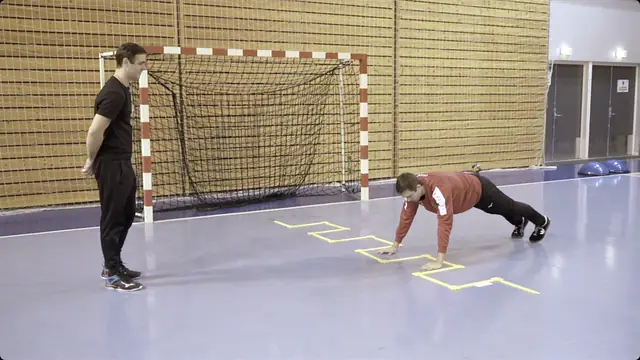
An agility ladder or floor markers can help organise movement practice. They do not make an exercise specific to goalkeeping by themselves.
Try a lateral movement that ends with the goalkeeper balanced in front of a controlled throw. Watch the direction of the first step, the transfer of weight and whether the player needs an extra adjustment before responding.
A curved arrangement of markers changes the direction of travel and can add variety. Start at a pace where the goalkeeper can control the foot placement and body position. Increase the challenge because the goalkeeper controls the movement, not because faster feet look more impressive.
Markers should make the intended path clearer. Keep them out of landing areas and remove anything that interferes with the save.
Use a reference the goalkeeper can understand
In my teaching I have used a rope as a height reference. The purpose is to make a movement target visible: where the hand should finish, or whether the body actually reached the intended low position.
For practice, choose a setup that cannot catch the goalkeeper or obstruct the movement. A visual mark beside the movement area may achieve the same purpose. The teaching idea is external feedback, not a particular piece of equipment.
A camera provides another reference. Film a few repetitions from an angle that shows the detail being trained. Watch them together and compare what the goalkeeper felt with what is visible.
If you are training alone, that comparison is especially useful. Keep the task simple enough to review honestly and use a safe, controlled setup. A recording can reveal a pattern; a qualified coach can help interpret what to change.
Let uncertainty enter gradually
A useful progression might move from a known shot to a choice of two placements, then to a pass before the shot. Another exercise can vary the thrower’s timing, so the goalkeeper waits for the real action instead of anticipating a rehearsed beat.
The challenge should still allow the skill to appear. If every repetition becomes a desperate rescue, reduce the speed, number of choices or movement distance. Then build again.
For explosive work, recovery between efforts belongs in the plan. The appropriate rest depends on the exercise and the goalkeeper. If speed and control fall away, examine the dose instead of treating exhaustion as proof of a useful session.
What the coach says becomes part of the drill
After a short set, describe the agreed detail. “You arrived balanced on the first two repetitions; on the third, you were still moving when the ball came” gives the goalkeeper a comparison they can use.
Ask for their observation too. Constant correction after every repetition can leave the player dependent on your voice. Leave room to try, notice and explain, then add the feedback that helps most.
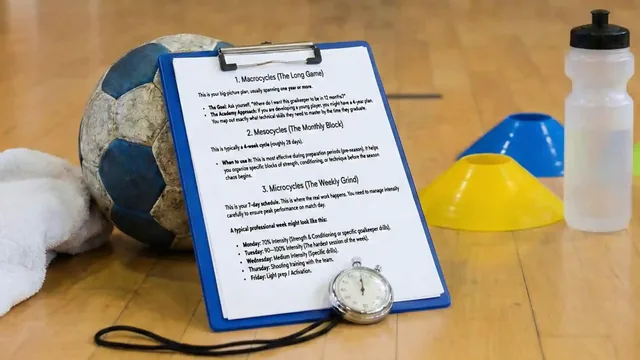
Keep a brief record. What was the purpose? What improved? What still needs a simpler task or another view? Those notes become the reason for the next session’s exercise selection.
You can begin with one transition, one useful observation and one change in difficulty. The connection that mattered in the online session matters here as well: everyone understands what the next repetition is meant to teach.
Related reading: planning goalkeeper training, low shots and high shots.