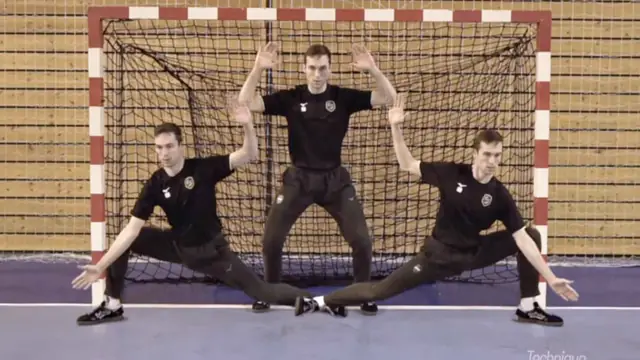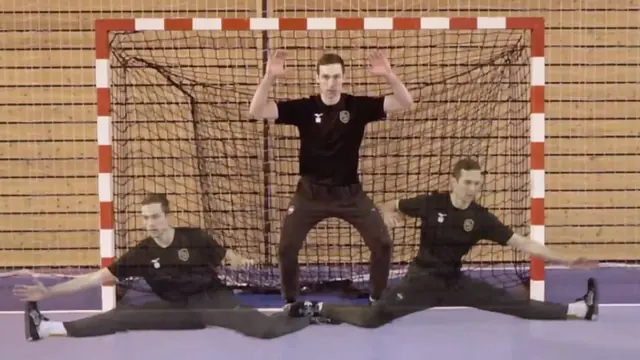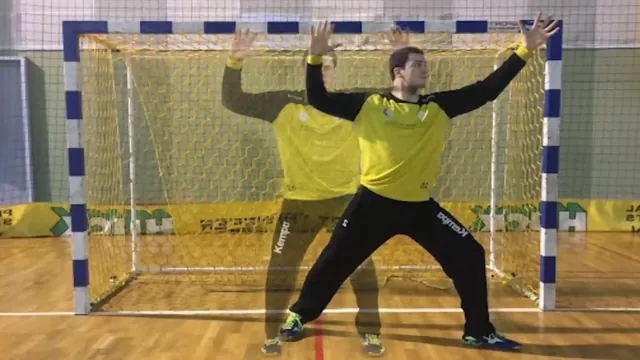

Picture a pivot receiving the ball with their back to goal. The goalkeeper moves forwards into the centre. The pivot turns, jumps sideways and releases from a new position.
The goalkeeper is close to the shooter, but the shot passes through space beside them. Coming out reduced the distance without adjusting to the new angle.
At six metres and on fast breaks, that is a useful distinction. Closing space can help, but direction and timing matter. I want the goalkeeper to respond to the developing situation rather than commit to the place they expect the shot to come from.
The pivot’s turn changes the problem
In the opening scene, the goalkeeper moved towards the pivot’s original position. The release happened somewhere else.
My teaching emphasis is to read the direction of the turn or jump and make the necessary lateral adjustment. If the player goes across, the goalkeeper needs to account for that movement before committing to a save aimed at the old position.
This is the same positioning relationship used elsewhere: stay oriented towards the ball and defend the space between the ball and the goal. Close range simply gives the goalkeeper less time to repair a mistaken choice.
“Be patient” does not mean freezing until the ball is already travelling. It means preserving useful options while reading the action. The appropriate movement depends on the pass, defensive pressure and the player’s release.
Give the goalkeeper a decision to practise
Begin with a pivot receiving a controlled pass and turning to either side at a manageable pace. At first, the turn can happen without a shot. The goalkeeper’s task is to adjust towards the new angle while remaining balanced.
Then add a predictable throw, followed by a choice of finish. The progression separates learning the positioning relationship from coping with a full-speed close-range shot.
Watch the first step. Did it help the goalkeeper face the actual release, or did it commit them to a guess? Even when the shot ends in a goal, the goalkeeper may have made a useful adjustment. A save can still hide a movement you would not want to repeat.
The feedback should explain that distinction so the goalkeeper understands what the exercise is developing.
A fast break asks the question differently
Now imagine an attacker approaching through the centre with space to run. The goalkeeper rushes forwards and settles early. The attacker can see the position, change direction or choose a finish over or around the goalkeeper.
A controlled approach can preserve more options. Establish a useful distance, stay balanced and keep reading the player and ball. Avoid moving into the airborne player’s landing path.
The exact depth cannot be prescribed without knowing the situation. The shooter’s speed, angle and control of the ball all matter. The goalkeeper’s reach and ability to change direction matter too.
In training, vary those starting conditions. If every fast break follows the same line and timing, the goalkeeper may learn a routine that looks successful only inside that drill.
Small responses can do useful work
Close-range shots often leave little time for a large movement. Hands that remain available and compact leg responses can cover space without a long preparation.
One habit I watch for is the same large leg lift on every attempt. A shooter who recognises the pattern can aim around the shape. Help the goalkeeper connect the response to the ball rather than produce a movement simply because it is familiar.
Experienced goalkeepers can use small changes in position to influence a shooter’s choice. That requires an understanding of the space being offered and the ability to respond. It should grow from control of the basic situation.
Read the result in context
A run of close-range chances can make a goalkeeper’s overall save percentage look very different from a match dominated by distant shots. Record the type and location of the chances before drawing conclusions about the performance.
A fixed “normal” percentage cannot describe every age group, league and defensive situation. Compare like with like where possible, and use the video to see which chances contained a realistic opportunity to improve the decision.
For the next review, select a few pivot chances and fast breaks. Pause before the first goalkeeper movement. Ask where the release is likely to develop, then watch what actually happened.
The goal of that exercise is visible in the opening scene: make the first movement serve the shot that develops, so the final response still has a chance to help.
Related reading: goalkeeper positioning and planning training.